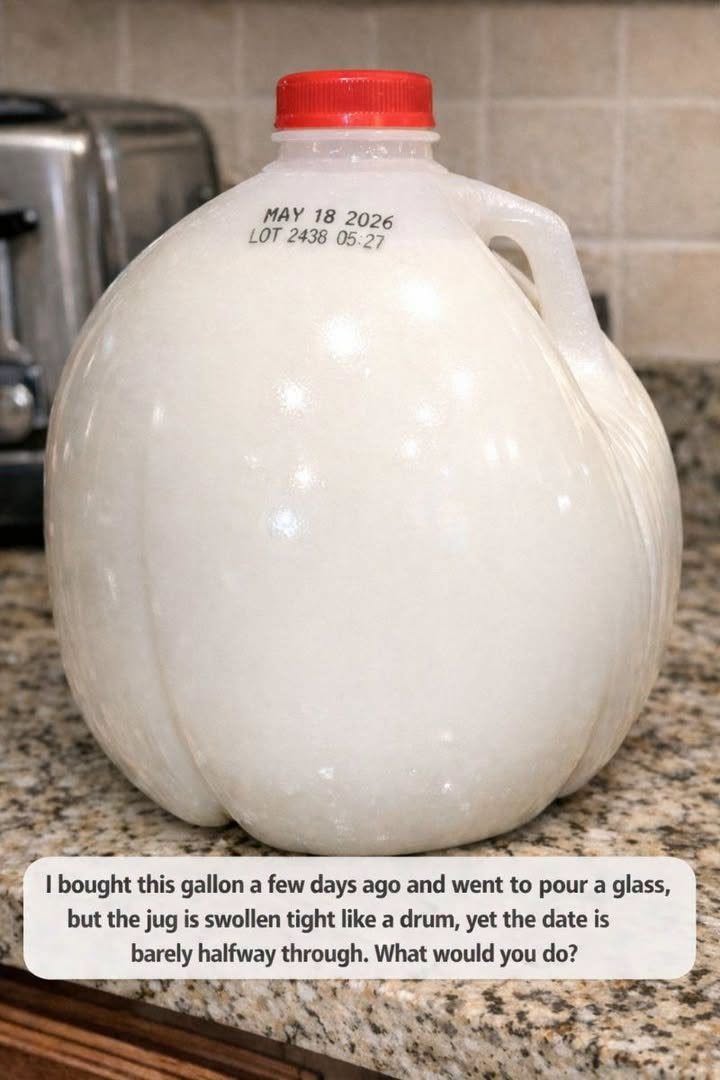
or otherwise abnormal, the safest approach is to avoid consuming the milk and discard it or return it to the retailer. If the milk has already been opened and you notice an unusual color, curdling, lumps, an off odor, or other obvious changes, do not drink it.
Once a milk container begins swelling, the safest decision is to treat the change as a potential spoilage problem rather than trying to prove its safety by tasting it.
5. Understand What Causes a Milk Jug to Bloat
Milk jugs can bloat when microorganisms grow in the product and produce gases during metabolic activity. Some microorganisms can break down components of milk and produce acids and other byproducts, potentially creating pressure inside the container.
Temperature fluctuations can also contribute to faster microbial growth. Keeping milk consistently refrigerated at or below 40°F (4°C) helps slow bacterial growth and preserve quality.