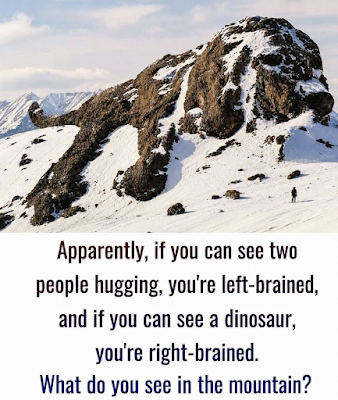
in an electrical outlet or recognized a human silhouette in the bark of a tree.
Experiences like these are commonly described using the term pareidolia.
Pareidolia is the tendency to perceive recognizable patterns or meaningful forms in visual information that is ambiguous or not intentionally arranged to depict those objects.
It explains why irregular natural formations can sometimes look remarkably familiar.
Faces are an especially common example.
Humans are highly responsive to face-like arrangements, even when the apparent face consists of nothing more than shadows
or unrelated objects.
Mountains provide