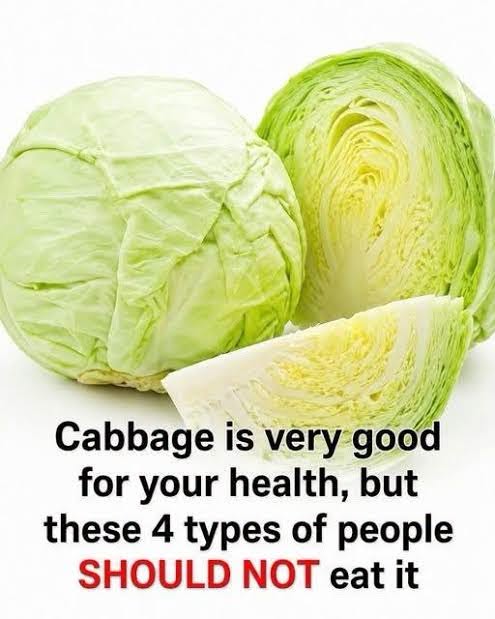
Cabbage has earned a reputation as one of the healthiest vegetables around.
Affordable, versatile, and packed with nutrients, it appears in everything from soups and salads to stir-fries and fermented dishes. Whether green, red, purple, or fermented into sauerkraut, cabbage has been a kitchen staple for generations.
But despite its many benefits, cabbage is not the perfect food for everyone.
For some people, eating large amounts of cabbage may cause digestive discomfort or interfere with certain health conditions and medications.
So who should be careful—and why?
Let’s take a closer look.
Why Cabbage Is Considered So Healthy
Cabbage belongs to the cruciferous vegetable family, alongside:
- Broccoli
- Cauliflower
- Kale
- Brussels sprouts
It’s naturally rich in nutrients including:
- Vitamin C
- Vitamin K
- Fiber
- Folate
- Antioxidants
- Plant compounds called glucosinolates
Because it’s low in calories and high in fiber, cabbage is often included in healthy eating plans aimed at:
- Weight management
- Digestive support